
Orion - Native Restoration
The Tautoru Mautai kaupapa on Banks Peninsula is a significant land restoration and carbon offset initiative led by Orion NZ in partnership with Wairewa Rūnanga. The project aims to recloak the whenua (land) with native plant species, contributing to the restoration of native ecosystems and helping offset Orion’s residual operational carbon emissions through to 2050.
Banks Peninsula
Location
Plants Supplied
150,000 +
Sector
Carbon Offset
Scope
Eco-sourcing, propagation & large-scale supply
Project Overview
The Brief
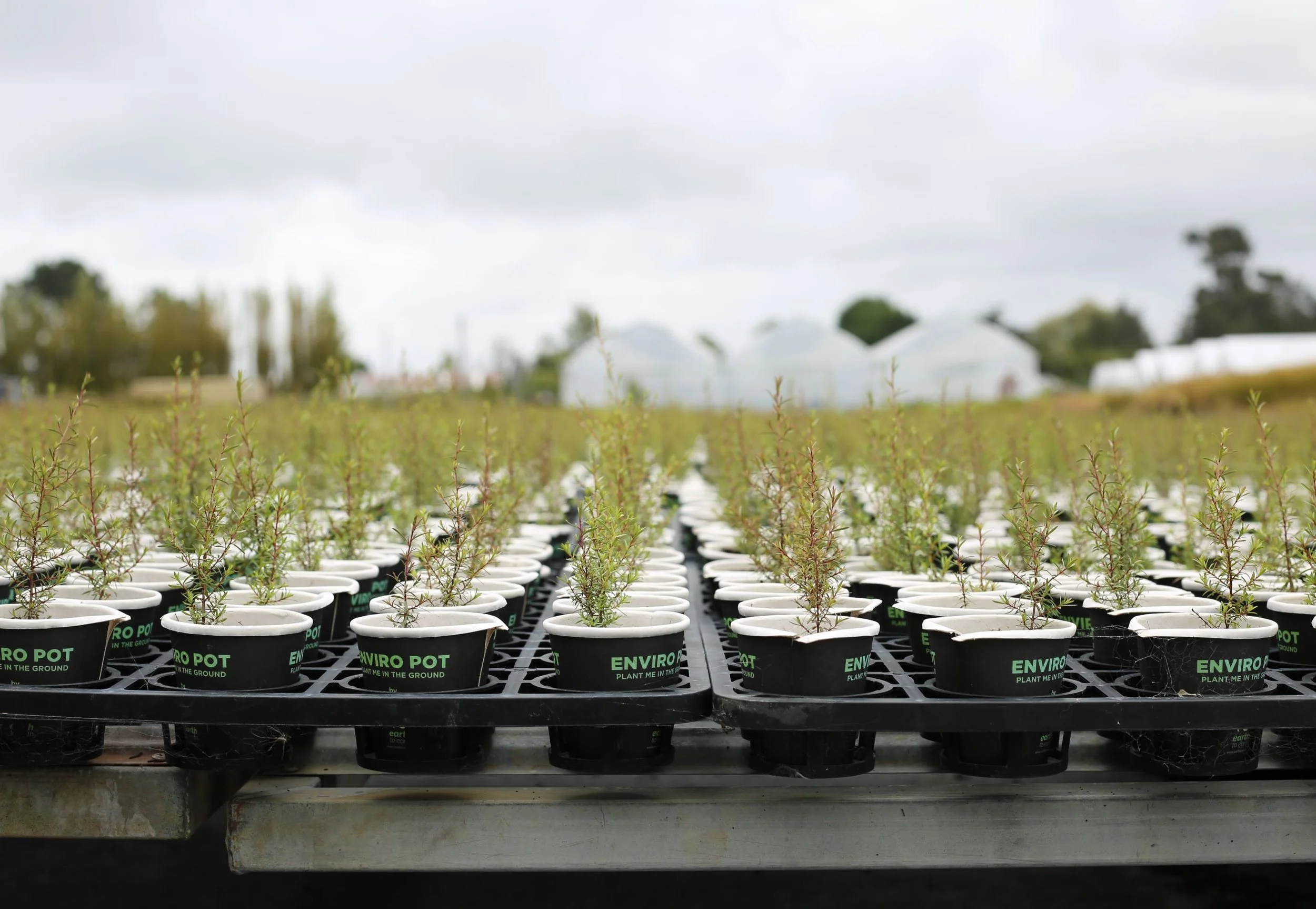
The project required the large-scale propagation and delivery of eco-sourced kanuka seedlings to act as a fast-establishing cover crop. Kanuka provides shelter and microclimate conditions that enable slower-growing hardwoods and podocarps to establish over time.
Eco-sourcing was critical, ensuring genetic suitability and long-term ecological integrity.
Riverside’s Role
Riverside was responsible for:
Eco-sourcing seed from naturally occurring trees on or near planting sites
GPS tracking and photographic documentation of all mother plants
Propagation and large-scale production of kanuka seedlings
Coordinating staged delivery for efficient planting
To date, over 140,000 kanuka have been delivered.
Sustainability & Innovation
Reducing the project’s plastic footprint was a key consideration.
Kanuka were grown in EnviroPots, significantly reducing plastic use while maintaining planting efficiency and establishment success. The pots were custom printed with partnership branding, reinforcing project identity and collaboration.
Outcome
The kanuka establish quickly, providing shelter and ecological conditions that support long-term native forest succession. The project demonstrates how large-scale restoration can balance ecological integrity, operational efficiency, and sustainability innovation.
Client Feedback
“For me your prices are competitive, but also Andrew is always willing to be innovative in his approach particularly from a sustainability perspective and listens to client’s needs.”
— Clayton Wallwork, Forest and Biodiversity Lead